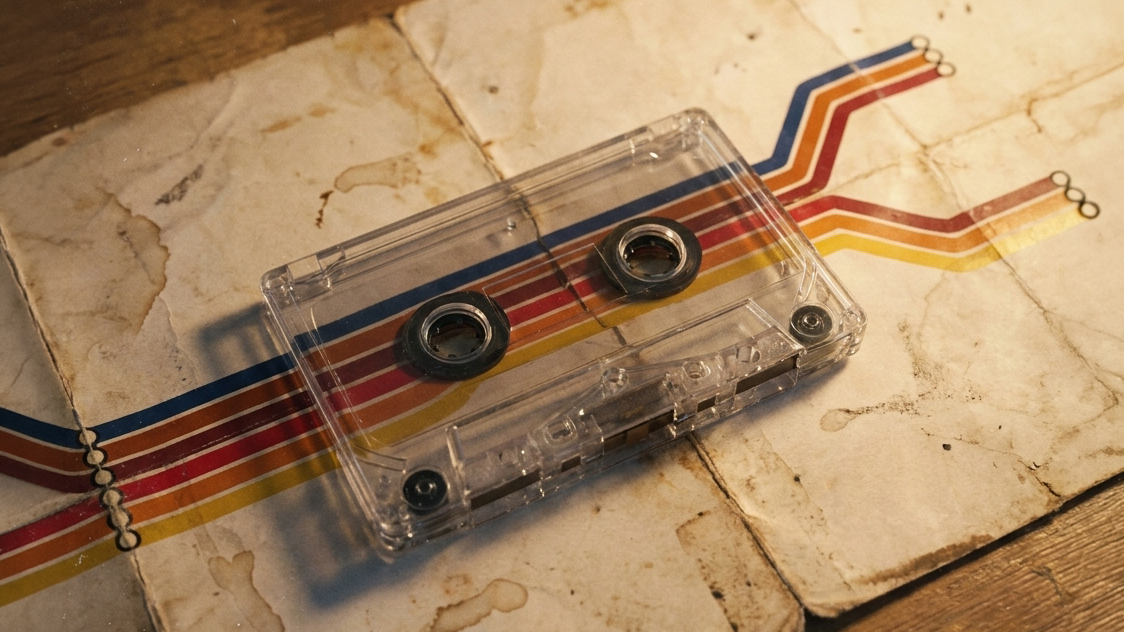
Part of a series on solving the Boise Trails Challenge. Previously: Boise Trails Challenge AI Route Planner · AI Finally Gave Me a Path. Now I Have More Work to Do. · i am the one that loops
I woke up yesterday 4,851 miles from where I'm now standing on a dirt path a mile from my house, grappling with the exact same problem I was grappling with a week ago. I'm trying to solve the Boise Trails Challenge, and the planning side of it keeps becoming a map problem - figuring out how to cover an entire trail system means routes that loop, fold back, and reuse the same dirt for different reasons. On the screen, those separate passes stack into one messy line. It doesn't help that it's bright as hell out and my body doesn't know if it's day or night.
But as it turns out, I'd been trying to solve a solved problem.
If you look at the London Tube map, or Vignelli/Unimark's 1972 New York subway map, they don't let overlapping routes jumble into a single messy line. They solve a trunk-and-branch legibility problem: when multiple services share a corridor and then split, the map orders and offsets the colored lines so the shared trunk reads as parallel strokes rather than a knot.
The math behind doing this is hard and would have taken me personally an infinite amount of time, but today I can just smash a few keys into my phone telling it what I want. The bottleneck is no longer building it. The bottleneck is knowing what to ask for.
It’s not like I haven’t seen transmit maps before. What was different this week was that I'd spent five days physically using them, the Elizabeth line from Liverpool Street to Heathrow, or the SeaTac in-airport transit loop. My brain wasn't studying them as much as it was in them. And then a week later, standing in the dirt, stuck in a tangled map of my own creation, the recency of those experiences was still there.
What was actually happening
You don't experience the search, you experience the result, the hunch, the wave of confidence, the sudden “finding the word”. Cognitive scientists would call that intuition: fast, reasoning-like inference whose intermediate steps just aren't consciously available. Underneath, your brain has been doing implicit learning: pulling patterns out of the environment without ever stating the rules out loud. Color relation, line offsets, the aligned separation of parallel paths. Filed away without remembering to do so.
Stick with me for a second. We love the aha feeling, but it doesn't come when we go looking for it. Sleep on it, or go for a walk, or take a shower. That's when the answer shows up, often phrased exactly the way you need it.
The aha is the moment a filed-away pattern collides with an active problem. Neuroscience has adjacent evidence for this kind of updating: the P300, an EEG signal often seen when something is task-relevant or surprising, is commonly interpreted as part of the brain's context-updating machinery, a rough neural cousin of "wait, this matters." One reason it may feel physical, the small jolt on a dirt path, is interoception, your brain modeling your own body's state as part of the signal. The "gut" in gut feeling is partly literal.
Even experts often can't reconstruct how they got there. The pattern arrives, the move is obvious, the middle stays opaque. Even this one: the aha was "trail map to transit map." I cannot explain the actual route that took me between those ideas.
Where this leaves the agent
Once I had the direction, "make it like a subway map", the coding agent built the trunk-and-branch rendering in minutes. The agent would have built it last week, or last month, at any moment I asked. It was always able to. The thing it didn't do in this setup was tell me what to ask.
LLMs are remarkable at pattern completion across compressed text. Hand one the phrase "make it a clickable map that looks like a subway map" and you'll get working code. What's harder is producing that phrase in the first place, a memory from last week surfacing unprompted, blending with the thing in front of you, the vocabulary arriving with the small jolt that says: the thing you saw yesterday is the shape of the thing you're stuck on now. Whatever the LLM equivalent of that recognition is, doing it cheaply, in the background, while you're running up a hill, is a different problem.
This is the part of the frontier I keep finding jagged. The agent is a much better builder than I'll ever be. But what a brain can do, mixing recent experiences prompted by the environment to pinpoint a new application of an old solution, is not a small thing. It just feels small from the inside.
The bottleneck has moved. It used to be implementation. Now it's the cross-domain pattern-matching that produces the vocabulary in the first place, finding the right name for the shape of your problem so the machine can recognize it. I don't think this is impossible for an agent, but I think we're badly underestimating the computing power it would take. The things that feel like nothing are usually the most expensive to reproduce.
Keep reading